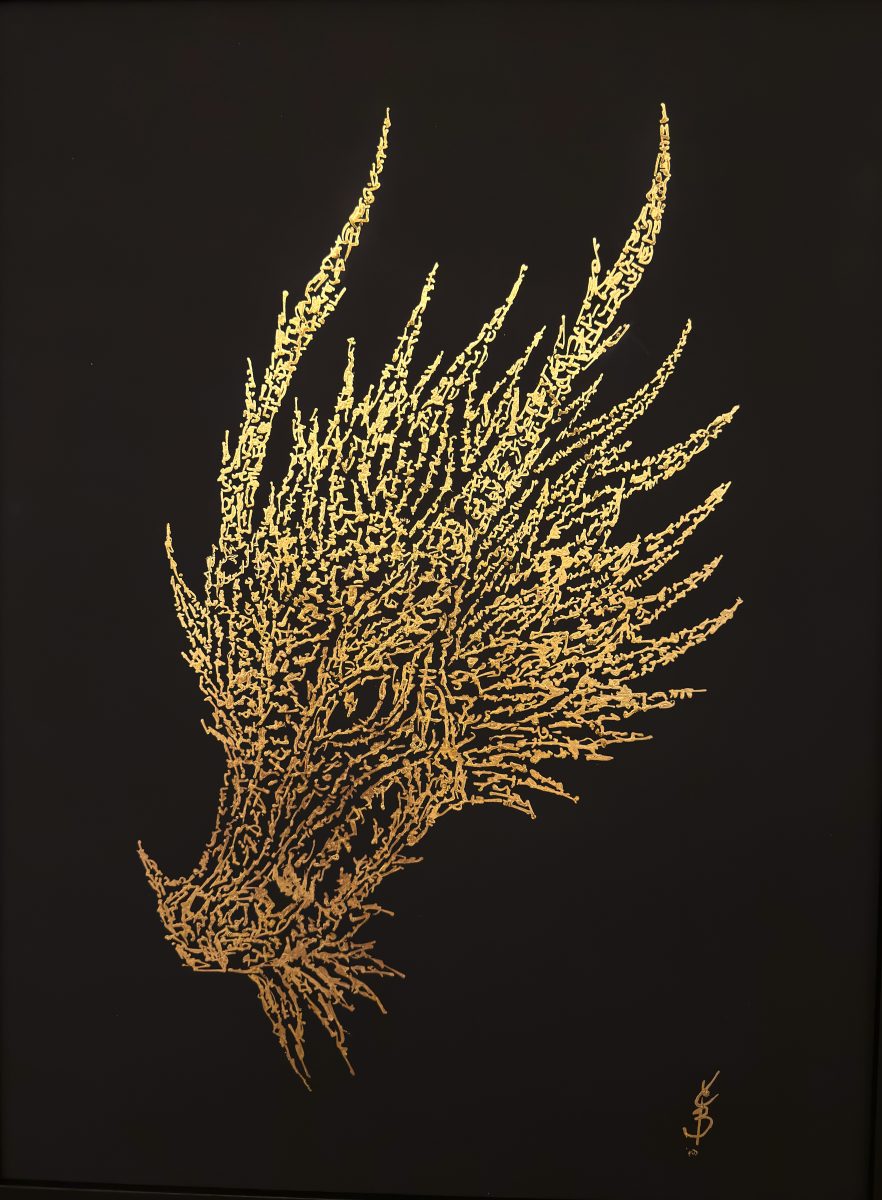
The instant gold leaf settles on the adhesive, something changes. The leaf is no longer floating. It is committed to the surface. But the work is not done. The handler's hand is still there, still deciding.
Every post-lay intervention carries cost. Here is what happens when you touch the leaf again.
Pressing. The most common reflex. The leaf is down but not flat enough. You apply pressure through the release paper or a soft cloth. But pressure is not uniform. The high points of the leaf or the adhesive catch first, and the pad drags across the surrounding area. This drag creates fine shear lines in the leaf surface. They read as dullness under raking light. Not an absence of gold, but a disturbance of its optical plane. The leaf is intact and the reflection is fractured. This is false dullness: the material is correct, the surface is not.
Chasing. A loose edge or a lifted corner invites a tool or a fingertip. You reach for the loose fragment to press it back. But the surrounding leaf is still tender. The pressure wave from your touch radiates outward and lifts adjacent sections that were well adhered. What began as one loose corner becomes three. The tool or fingertip also transfers micro oils or moisture, further compromising the bond in that zone. The chase creates its own problem.
Repositioning. If a section lands misaligned, the instinct is to nudge it before it sticks. But the adhesive below has already begun its work. Moving the leaf laterally drags gold through wet mordant. The gold fibrils separate. The surface becomes a composite of dragged metal and exposed adhesive. It cannot be smoothed back. The section must be removed and relaid. Most repositioning attempts make the original placement unrecoverable.
Re-touch timing. When a section needs a second piece of leaf, timing matters. Too soon, and the new leaf sinks into the still-wet adhesive from the original lay, altering its height relative to the surrounding gold. Too late, and the adhesive has skinned over. The new leaf bonds at the surface only, creating a visible edge line at the overlap. The window between these two failures is narrow and depends on temperature, humidity, and the specific mordant formulation. There is no universal waiting time. Only observation.
The discipline of gilding is not only in the lay. It is in knowing when to stop touching. The leaf does most of its work after you put your hands down. Give it time. Let the bond form. Let the adhesive set. Then assess. Not before.
These material choices are easiest to read in finished work: Anabasis and Porch Session apply this thinking in gold leaf on a black ground. If you would like a piece made to your own scale and setting, you can commission a gold-leaf-on-black artwork.