Medieval and Renaissance illuminated manuscripts used gold not to embellish text but to organize it. Gold letters marked the beginning of passages. Gold borders created frames and visual containment. Gold backgrounds provided legibility. The gold was functional—it served the text.
The size of the gold was controlled and meaningful. A large illuminated letter in gold indicated importance. A full-page gold border indicated a section boundary. The placement and quantity of gold guided the reader through the manuscript. This was not excess—it was structured information design.
Gold also served optical purposes. Parchment or vellum can be difficult to read under certain light. Gold reflects light uniformly and makes text easier to read. The gold background behind text increases legibility. Gold is not decoration in this context—it is functionality that happens to be beautiful.
Contemporary understanding of illuminated manuscripts often focuses on their beauty and luxury. That is true, but it misses the point. The gold was there because it worked. It made the manuscript more readable, more navigable, more sophisticated in its visual organization. The beauty is the result of functionality refined and perfected. That principle—material intelligence in service of structure—is what links historical gilding to contemporary practice at NoirGold.Art.
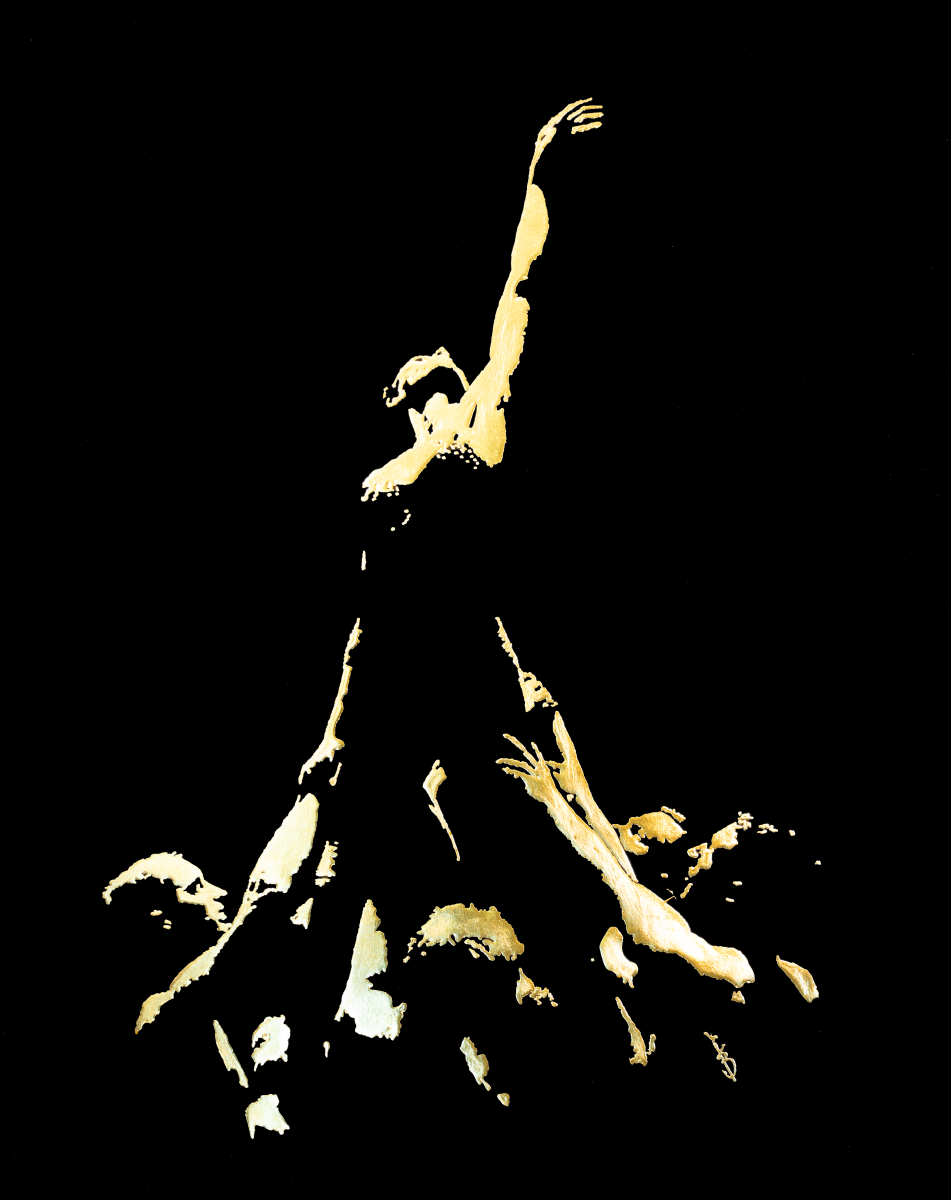
These material choices are easiest to read in finished work: Aurelia Cerebralis and Sancta apply this thinking in gold leaf on a black ground. If you would like a piece made to your own scale and setting, you can commission a gold-leaf-on-black artwork.